
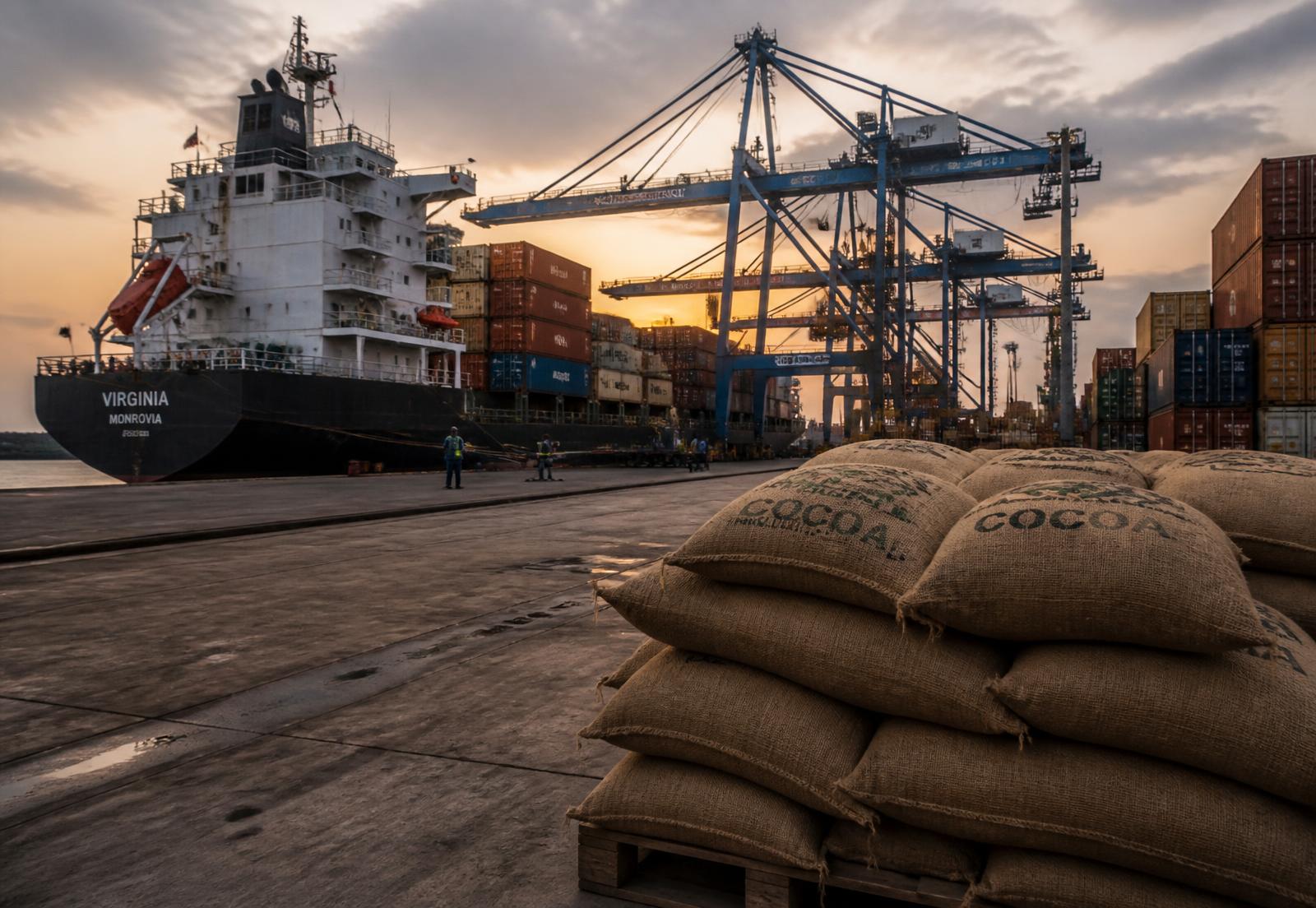
A cargo is only as good as the contract, the documents and the payment behind it. This page explains the terms we trade on, how we ship, how we are paid, and how we manage risk across the chain.
Incoterms 2020
We trade on standard Incoterms 2020. The Incoterm defines where risk and cost transfer from seller to buyer. The terms we use most:
| Incoterm | What it means | Where we use it |
|---|---|---|
| FOB (Free On Board) | Seller delivers loaded on board the vessel at origin port; risk passes at the ship's rail. | Standard for origin-loading cocoa and coffee. |
| CFR (Cost & Freight) | Seller pays freight to destination port; risk passes at loading. | Where buyers want freight handled but take destination risk. |
| CIF (Cost, Insurance & Freight) | As CFR, plus marine insurance to destination. | Common for first-time buyers and CIF-destination contracts. |
| FCA (Free Carrier) | Seller delivers to carrier at named place; flexible for container handover. | Containerised lots at origin terminals. |
| DAP (Delivered at Place) | Seller delivers to a named destination place, ready to unload. | Door-delivery or destination-warehouse terms. |
We will recommend the Incoterm that fits your logistics and risk preference, and explain it plainly.
Container vs breakbulk
Container: 20' / 40' FCL
The modern default for cocoa and coffee. Sealed at origin, tracked to destination, less handling damage and suited to most buyers.
Our default
Breakbulk / bulk in hold
For very large volumes or specific destinations. Requires different survey, stowage and supervision at both ends.
By exception
Big bags in container
A hybrid: FIBC big bags loaded into containers, giving bulk-style handling with container security and traceability.
Hybrid
Most of our shipments are containerised. We use breakbulk only where volume or destination warrants it.
Shipping and freight
Carrier selection
Vetted lines and freight forwarders with reliable Africa–Europe and South America–Europe routings.
Booking lead times
We manage booking windows so the shipment dates written into the contract are met.
Transhipment
Where direct services are unavailable we select hubs carefully and track transit leg by leg.
Marine insurance
Arranged under CIF, or separately on FOB/CFR where the buyer requests cover.
Payment instruments
How a shipment is paid for is part of the risk structure. We trade on:
Irrevocable Letter of Credit at sight
The standard for international soft-commodity trade. The buyer's bank pays against the documentary pack on sight.
Confirmed irrevocable LC
A second bank confirms the LC, adding a payment guarantee. Used where the issuing bank's country carries risk.
Cash Against Documents (CAD / D/P)
Documents released to the buyer against payment. Used with established counterparties.
Open account
Only with vetted, long-standing counterparties, and supported by credit insurance.
We do not trade on undefined or handshake terms. The payment instrument is written into the contract.
Documentary pack
A shipment pays against documents. The standard pack:
We prepare and check the pack before presentation so it pays first time, not after queries.
Contract templates
We contract on standard, recognised soft-commodity terms, adapted to the lot:
- Cocoa: terms in the spirit of the Federation of Cocoa Commerce (FCC) contract framework, with quality clauses, shipment windows, force majeure and arbitration provisions.
- Coffee: terms in the spirit of the European Coffee Federation (ECF) and GAFTA-style frameworks, with grade, screen, defect and cup clauses.
We do not trade on bespoke, one-sided contracts. Standard terms protect both parties and make disputes resolvable.
Price and hedging
- Pricing basis: contracts may reference ICE / Euronext futures (London cocoa, New York cocoa; London Robusta coffee) with a fixed or floating basis.
- Hedging: where appropriate, we hedge price exposure through the relevant futures market so a firm contract does not become a speculative position.
- Risk note: hedging manages price risk for the trade; it does not speculate on market direction.
Risk in trade
We name and manage four risks on every contract:
- Price: via contracting basis and hedging.
- Quality: via specification, sampling and pre-shipment approval.
- Logistics: via vetted carriers, insured freight and documentary control.
- Counterparty / payment: via KYC, LC instruments and credit limits.
Talk to our trading desk
Whether you are structuring a first purchase, confirming payment terms, or arranging a destination delivery, the Madrid desk will work through the terms with you.